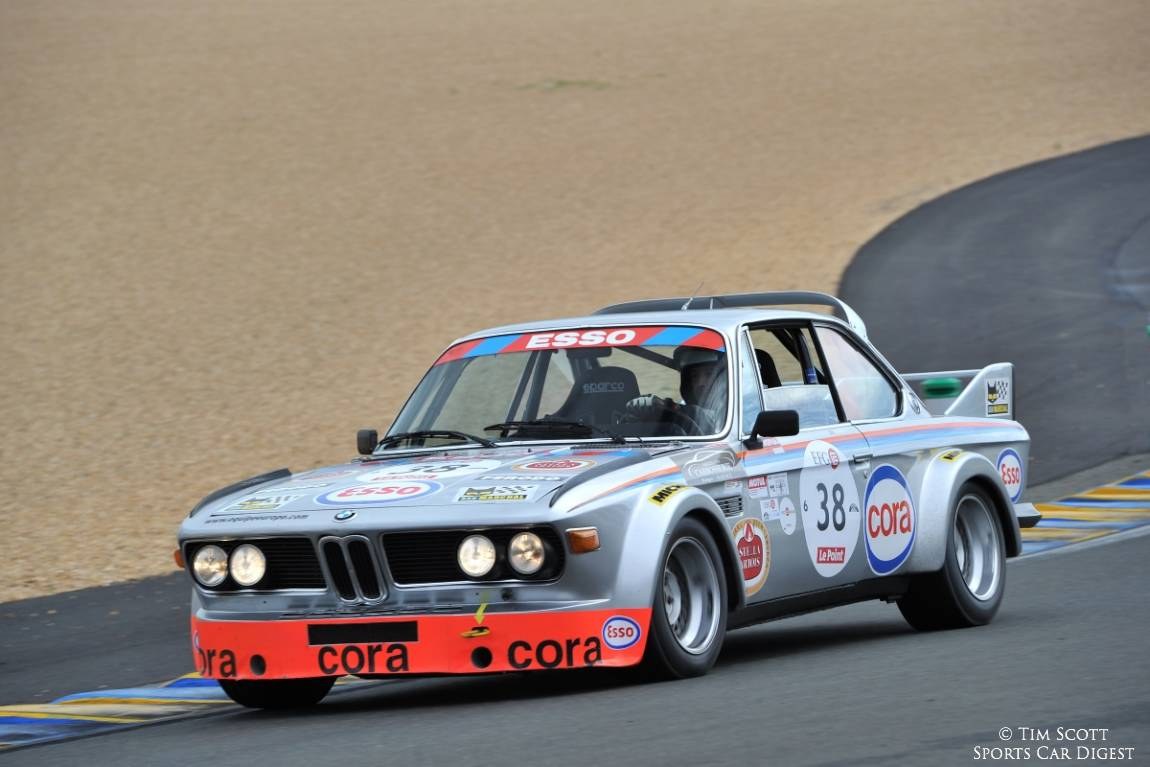
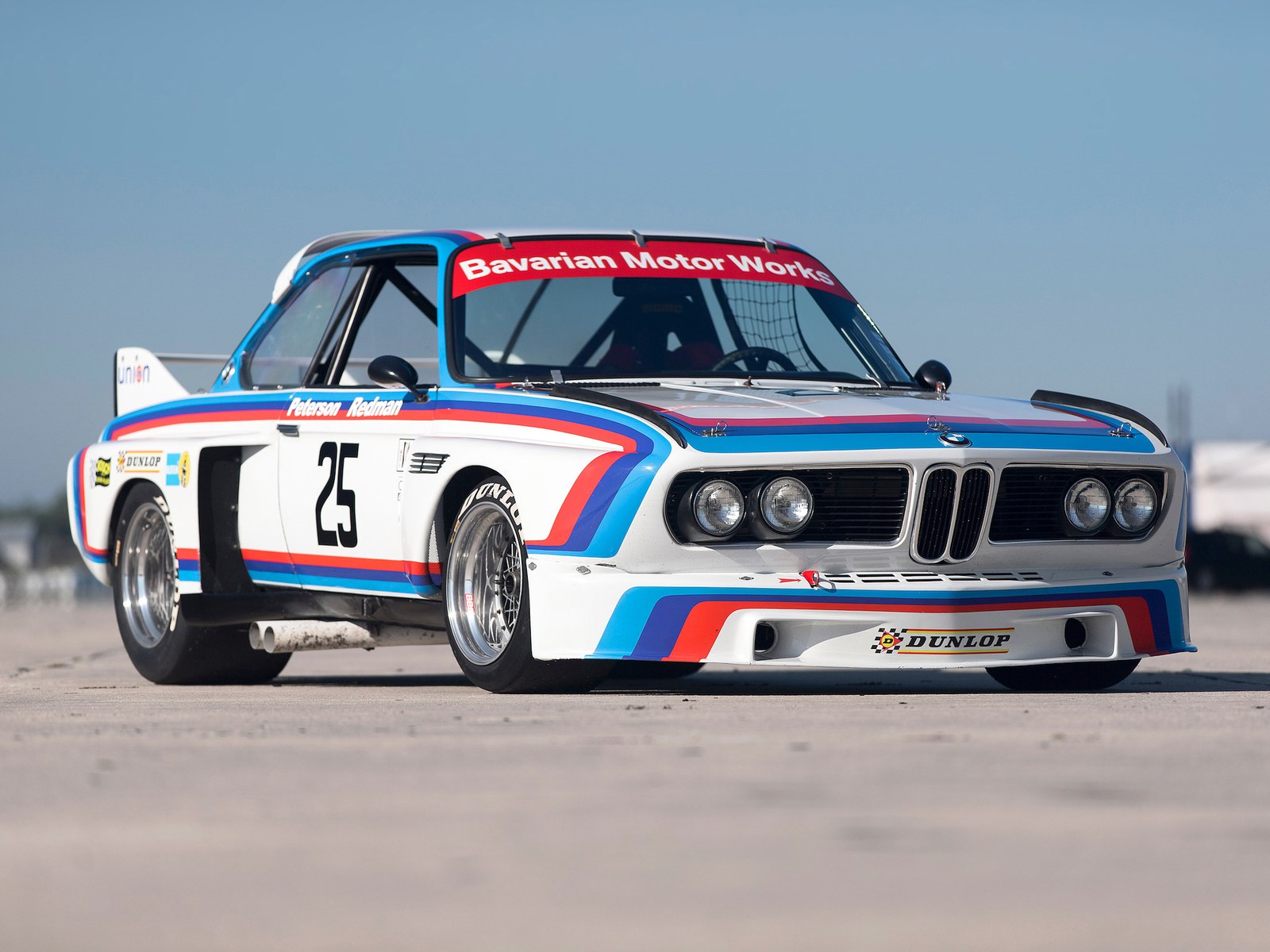
The BMW 3.0 CSL was a special variant of the BMW New Six Coupe. Introduced in 1972, the 3.0 CSL was created in order for BMW to reach homologation requirements for the European Touring Car Championship. The L in the name CSL means light, as the CSL features large weight reductions compared to its more luxurious siblings. While all CSL cars were fitted with a version of BMW's M30 inline 6 engine, displacement grew slightly over production until 1973 when displacement reached 3.2L. This engine upgrade coincided with the homologation of the aero kit for roadgoing versions. Cars fitted with this body kit are commonly referred to as 'Batmobile' cars.
A variation of the 1971 3.0 CS and 3.0 CSi, the 3.0 CSL was specially approved for competition and made its debut in 1972. Destined primarily for the European Touring Cars Championship, it became one of the top competitors as early as 1973, winning not only the European title, but also a class victory at the 24 Hours of Le Mans in the hands of Dieter Quester and Toine Hezemans, 11th overall. It was to be the best result achieved at Le Mans by the 3.0 CSL, which also won at the 24 Hours of Spa-Francorchamps twice (1973 and 1976).
This performance coupé from the 1970s was a touring car superstar and the heroic piece of machinery which put BMW back among the all-time racing greats. The 3.0 CSL is also, by a huge margin, the most handsome touring car of its era and a car that paved the way for the first M cars and BMW’s glory that soon followed.