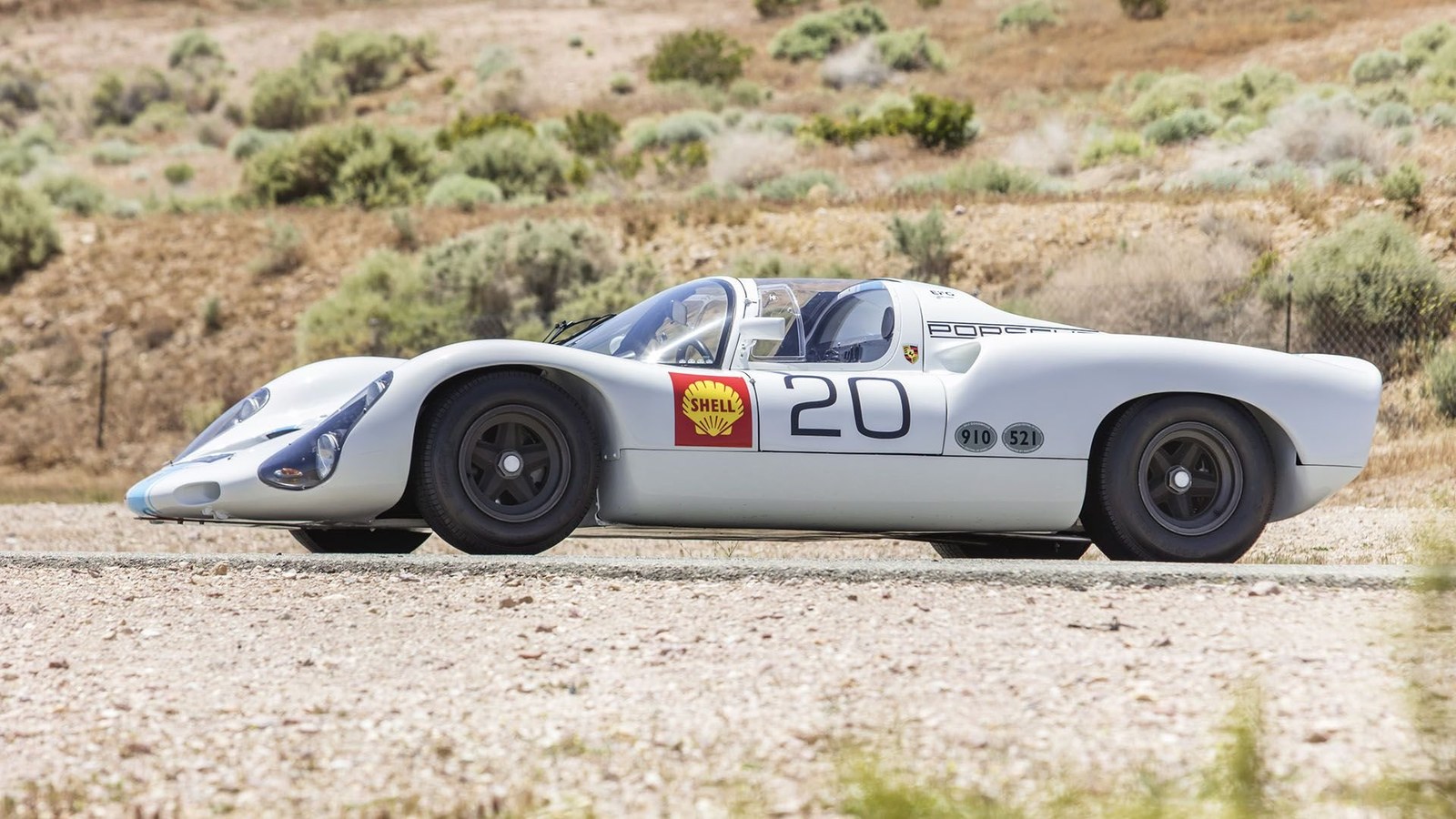
The Porsche 910, also known as the Carrera 10, was introduced during the summer of 1966 and raced through 1967, continuing the company's assault on international competition. It was similar to the preceding 906, including the spaceframe chassis, but with suspension, changes to accommodate the smaller 13-inch magnesium wheels. The body featured a Targa roof which eliminated the 'gull-wing' doors from the 906. The engine continued to be the two-liter, flat-six found in the Type 906.
The Porsche 910, produced between 1966 and 1967, played a pivotal role in Porsche’s relentless quest for motorsport dominance during the 1960s. Building upon the successes of the 906, the 910 refined Porsche’s mid-engine prototype formula and solidified the brand’s reputation for precision engineering, lightweight construction, and exceptional handling. Despite its short production run, the 910 achieved remarkable success, competing against some of the greatest race cars of its era in endurance races, hill climbs, and circuit events.
The Porsche 910 was designed to address the limitations of the 906 Carrera 6 and provide a competitive edge against formidable rivals like Ferrari and Ford. Headed by Ferdinand Piëch, Porsche’s development team focused on refining aerodynamics, improving suspension geometry, and reducing weight. The 910 utilized a tubular steel spaceframe chassis with a sleek fiberglass body, continuing Porsche’s tradition of lightweight design.