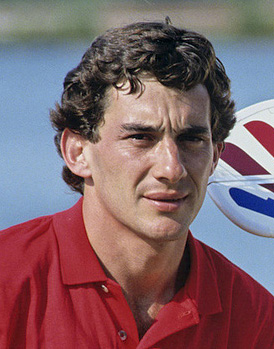
Ayrton Senna da Silva was born in São Paulo in 1960 into a well-off family and started karting at four, in a kart his father built. He came to England in 1981, won everything in the junior formulae, and reached Formula One with the small Toleman team in 1984. At Monaco that year, in heavy rain, he was catching the leader, Alain Prost, when the race was stopped. Nobody who saw it forgot it.
He won his first Grand Prix in the rain in Portugal in 1985 for Lotus, and moved to McLaren in 1988, alongside Prost. He won the title that year, lost it to Prost in 1989 after their collision at Suzuka, and won it back in 1990 by driving into Prost at the same corner — then again in 1991. Sixty-five pole positions, forty-one wins, six of them at Monaco.
The lap most often shown is the first one at Donington in 1993. Starting fifth on a wet track in a McLaren that was clearly slower than the Williams cars, he passed four drivers in less than a lap and was leading by the end of it.
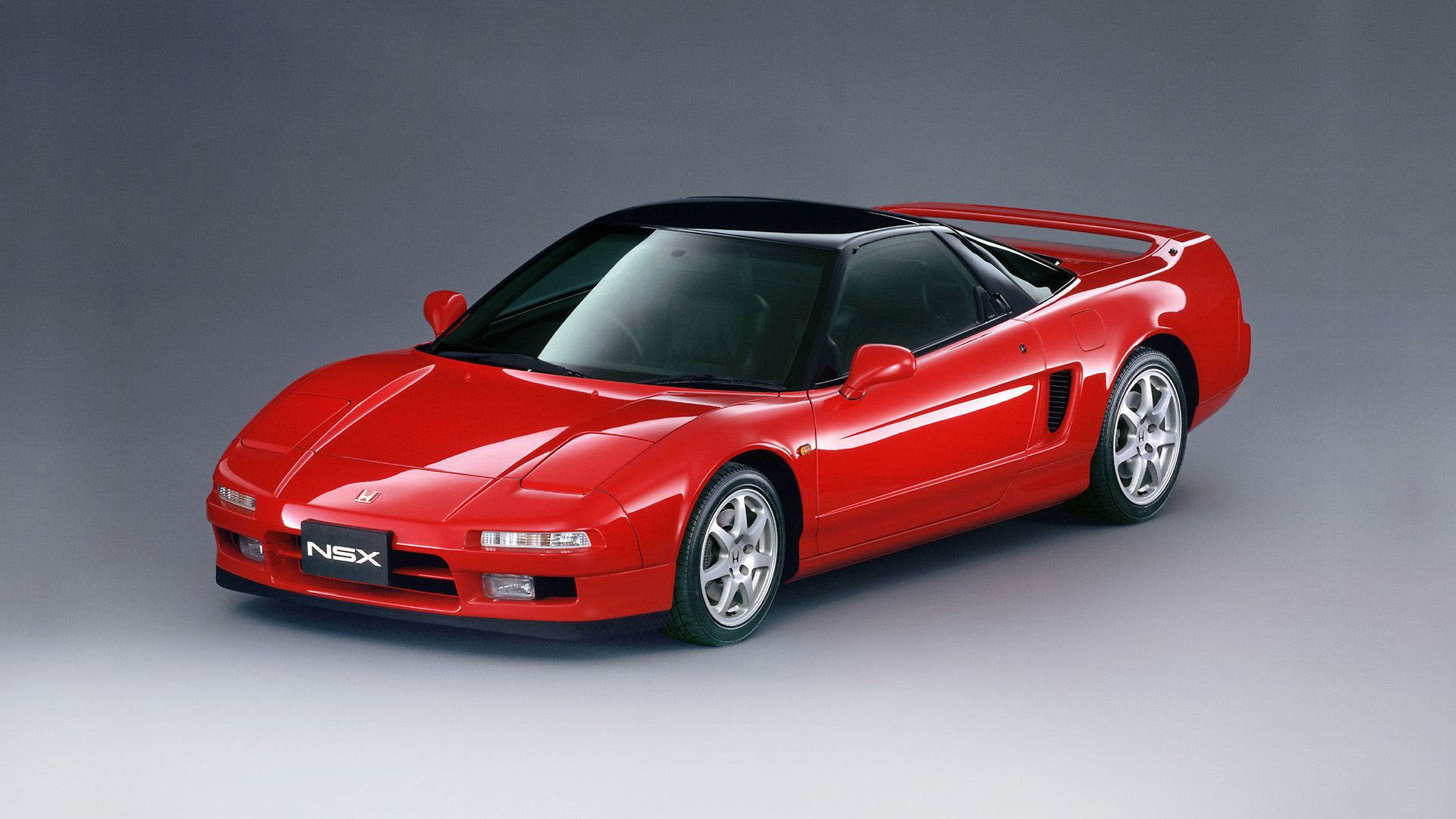
His link with the road cars in this catalogue is direct. While Honda was developing the NSX, Senna drove the prototypes at Suzuka and told the engineers the chassis was not stiff enough; the production car was stiffened as a result. McLaren later named its most extreme road car the Senna.
In 1994 he moved to Williams. On 1 May, at Imola, the day after the Austrian Roland Ratzenberger had been killed in qualifying, Senna’s car left the track at the Tamburello corner and struck the wall. He was thirty-four. Brazil declared three days of mourning, and the charitable institute his sister founded in his name still works with Brazilian children.
Foto: Wikimedia Commons · Wikipedia
The cars
Cars in the catalog he drove, won in, or that were named after him.